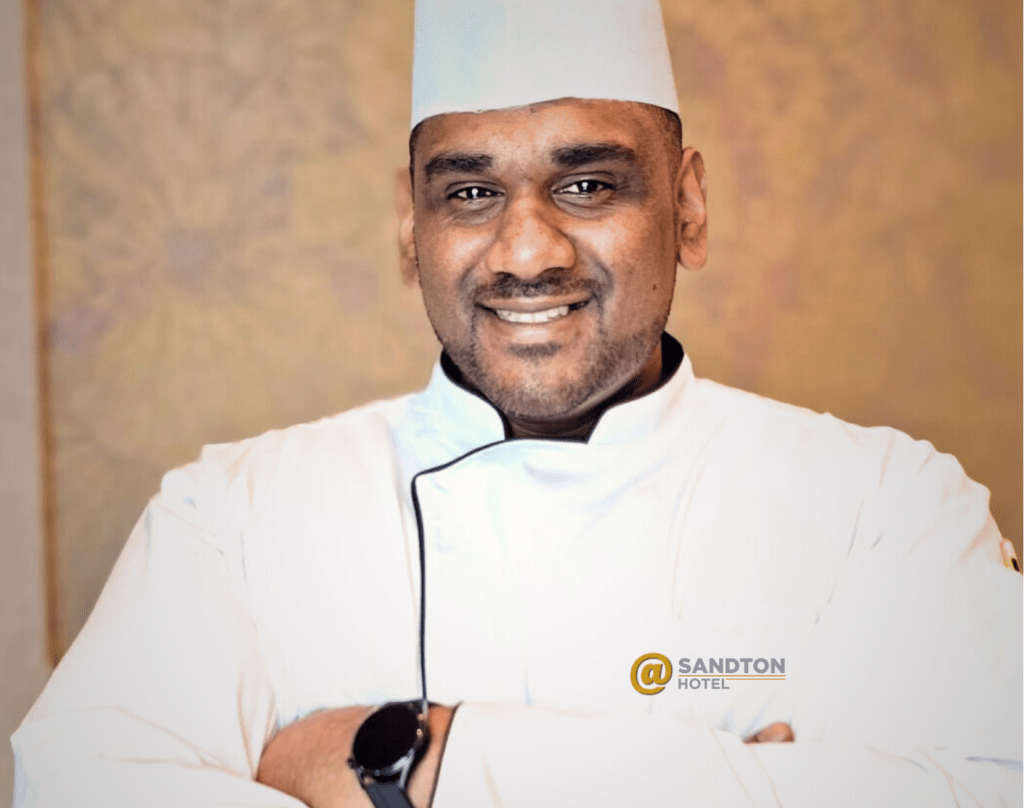
For award winning chef, Yoshan Naidu, the culinary bug bit early. For him it all started when he observed his mother running her small takeaway shop. In fact, to this day his mother’s chicken curry brings back warm memories.
“The aroma, the spices, and the comfort it provides remind me of family gatherings and the love that goes into cooking,” he says.
Her dedication served as an example and pushed him to great heights. He’s won many accolades including leading the winning team at Unilever’s “Chef of the Year Competition” in 2014 and winning Chopped South Africa in 2015.
Recently he’s been appointed the executive chef at @Sandton Hotel. When asked what his greatest achievement so far is, he states, “My greatest accomplishment would be building a strong team at my restaurant and fostering a culture of creativity and excellence. Seeing my team grow and succeed is incredibly fulfilling.”
Chef Yoshan has a passion for developing young talent and with this appointment he also brings in a new culinary vision to the establishment. Chef Yoshan has a love for fresh, seasonal ingredients, thus his focus is on sustainable dining and a fresh approach rooted in South Africa’s diverse food culture. Get to know the chef a little bit more through the Q&A below:
What skills does one need to run a kitchen?
“Running a kitchen requires strong leadership skills, effective communication, and the ability to multitask. You also need a solid understanding of culinary techniques, time management, and a passion for food. Adaptability is crucial, as is the ability to inspire and train your team.”
Is it better for a chef to be innovative or creative?
“While both qualities are important, creativity is essential for a chef. It allows you to express yourself and develop unique flavours and presentations. Innovation comes into play when you apply those creative ideas in new and exciting ways, often finding fresh solutions to challenges.”
What’s the one cardinal rule for plant-based cuisine?
“The key rule is to focus on fresh, high-quality ingredients. Build flavour through seasoning and layering ingredients. Don’t just replicate meat dishes; instead, celebrate the natural flavours and textures of vegetables.”
What do South Africans need to know about sustainable practices when it comes to food?
“South Africans should prioritize sourcing ingredients locally and seasonally, reducing food waste, and supporting sustainable farming practices. Understanding the impact of overfishing and choosing ethically sourced meats are also vital for long-term sustainability.”
Which local ingredient is the most hardworking/versatile?
“I believe sweet potatoes are incredibly versatile. They can be roasted, mashed, used in soups, or even turned into desserts. Their sweetness and nutritional value make them a staple in many dishes.”
What is the one dish you’d make that represents you?
“A fusion dish that combines traditional South African flavours with contemporary techniques, like a bobotie-inspired meatball with a twist. It reflects my heritage while showcasing innovation.”
What was the worst meal you’ve ever made and what did it teach you?
“The worst meal I ever made was a cheesecake. I was experimenting with a new recipe and didn’t double-check the measurements. The result was a dense, overly sweet disaster that nobody could enjoy. It taught me the importance of precision in baking, as well as the value of sticking to tried-and-true recipes when you’re trying something new. Baking is an exact science, and even small missteps can lead to big problems. Since then, I always make sure to measure carefully and understand the techniques behind what I’m making before I dive in.”
Do you have any tips for young chefs?
“Stay curious and never stop learning. Embrace every experience, whether it’s a success or a failure. Seek mentorship, work hard, and stay true to your passion. The culinary world is demanding, but it can also be incredibly rewarding if you put your heart into it.”




 A Dish and A Bev
Leave a reply to Menu Development Insights from Chef Mahle Vellem – A Dish and A Bev Cancel reply